© 2026 Portfolio | All Rights Reserved
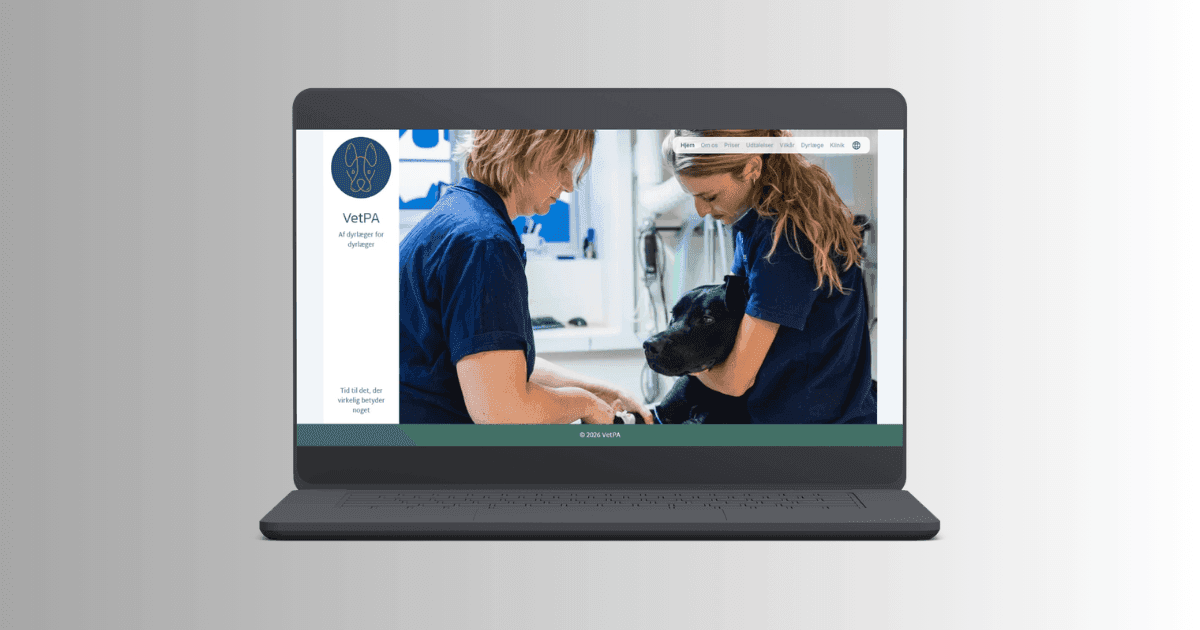
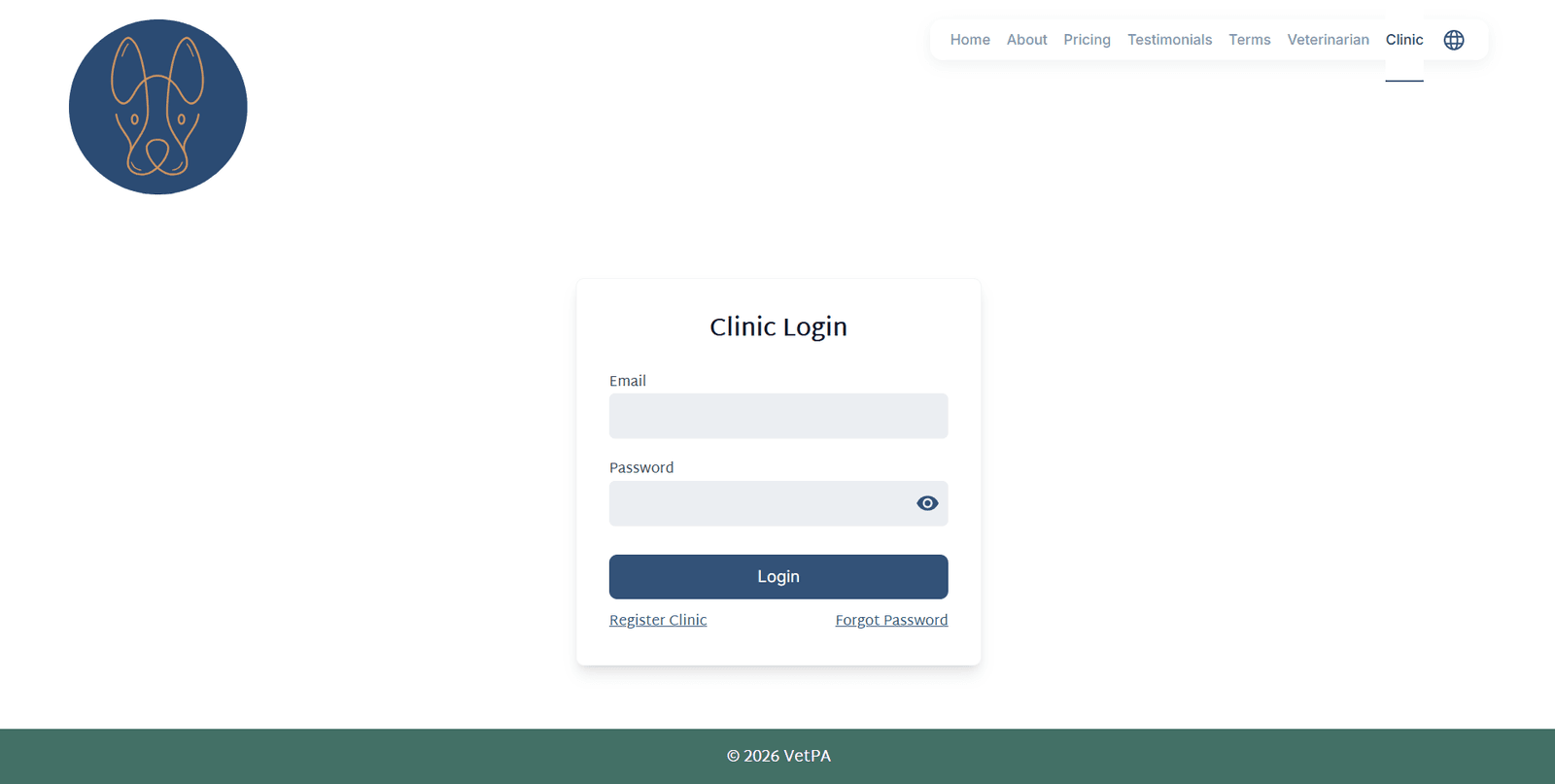
VetPA is an AI-powered veterinary documentation platform designed to help veterinarians spend less time writing clinical records and more time caring for animals. The platform uses AI to assist with documenting consultations and preparing veterinary journal entries, addressing the administrative work that often follows a busy appointment schedule.
As a Full Stack Developer, I worked on the development of VetPA using a modern web technology stack that includes React, Next.js, Python, FastAPI, vector databases, and Redis. My technical focus covered the frontend and backend development of an AI-driven application, with the aim of supporting its core workflows and providing a practical experience for veterinary professionals.
VetPA is built for veterinary professionals who need a more efficient way to handle clinical documentation. Its central purpose is to support the preparation of veterinary records from consultation information, helping practitioners manage documentation as part of their daily clinical workflow.
The platform combines a web-based interface with AI-related functionality to support this documentation process. My role involved full-stack development using modern frontend and backend technologies, contributing to the technical foundation of an application designed around the specific needs of veterinary practices.
Veterinarians must balance patient consultations with the responsibility of maintaining accurate clinical records. When documentation is delayed until after appointments, it can add to the workload at the end of the day and make it harder to keep records up to date. VetPA addresses this broader workflow challenge through AI-assisted veterinary documentation.
From a development perspective, an AI-powered application requires a frontend that supports its intended workflows and a backend capable of handling application logic and AI-related processing. My work involved using the supplied technology stack to develop the application across these layers, while keeping the implementation aligned with its veterinary documentation purpose.
I contributed to VetPA as a Full Stack Developer, working with React and Next.js for the web application and Python and FastAPI for backend development. This combination supports a separation between the user-facing application and server-side functionality, providing a foundation for implementing application workflows and connecting the interface to backend services.
The wider technology stack also includes vector database technology, Redis, Docker, and AWS. These technologies form part of the project's technical environment for AI-related development, data handling, and deployment infrastructure. Their specific configurations and individual implementation responsibilities are not detailed here, so this description focuses on the confirmed stack rather than claiming unverified architecture decisions.
VetPA focuses on AI-assisted veterinary documentation and provides a digital workflow intended to reduce the administrative burden associated with clinical records. The following features reflect the platform's publicly described purpose and functionality.
I used React and Next.js as part of the frontend technology stack for VetPA. These technologies provide the foundation for building a modern web application, organizing its interface into reusable components, and connecting user-facing pages with the application's functionality.
Figma, HTML, CSS, and Tailwind CSS were also included in the project stack. Together, these technologies support the design and implementation of the web interface, from translating visual layouts into frontend code to styling application elements. The exact component structure, state management approach, and individual interface features are not specified here.
The backend technology stack includes Python and FastAPI, which I used as part of my full-stack development work on the application. FastAPI provides a framework for building API endpoints and connecting frontend workflows with server-side application logic, while Python supports the implementation of backend functionality and AI-related processing.
The project also includes vector database technology and Redis, alongside Docker and AWS. These technologies are relevant to the application's broader data and infrastructure environment. Without further implementation details, I have not attributed specific vector search strategies, caching policies, database schemas, or cloud deployment configurations to my work.
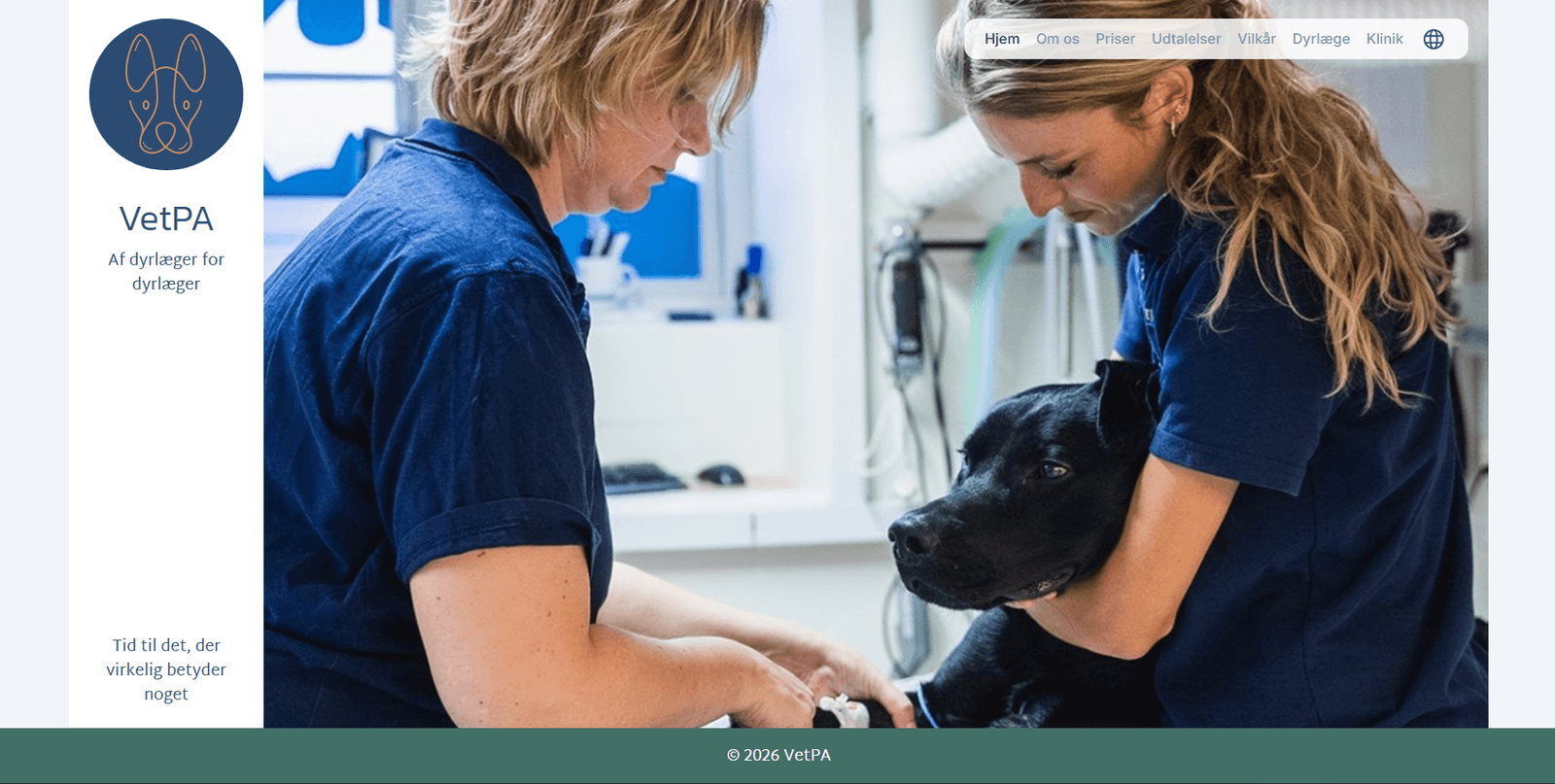
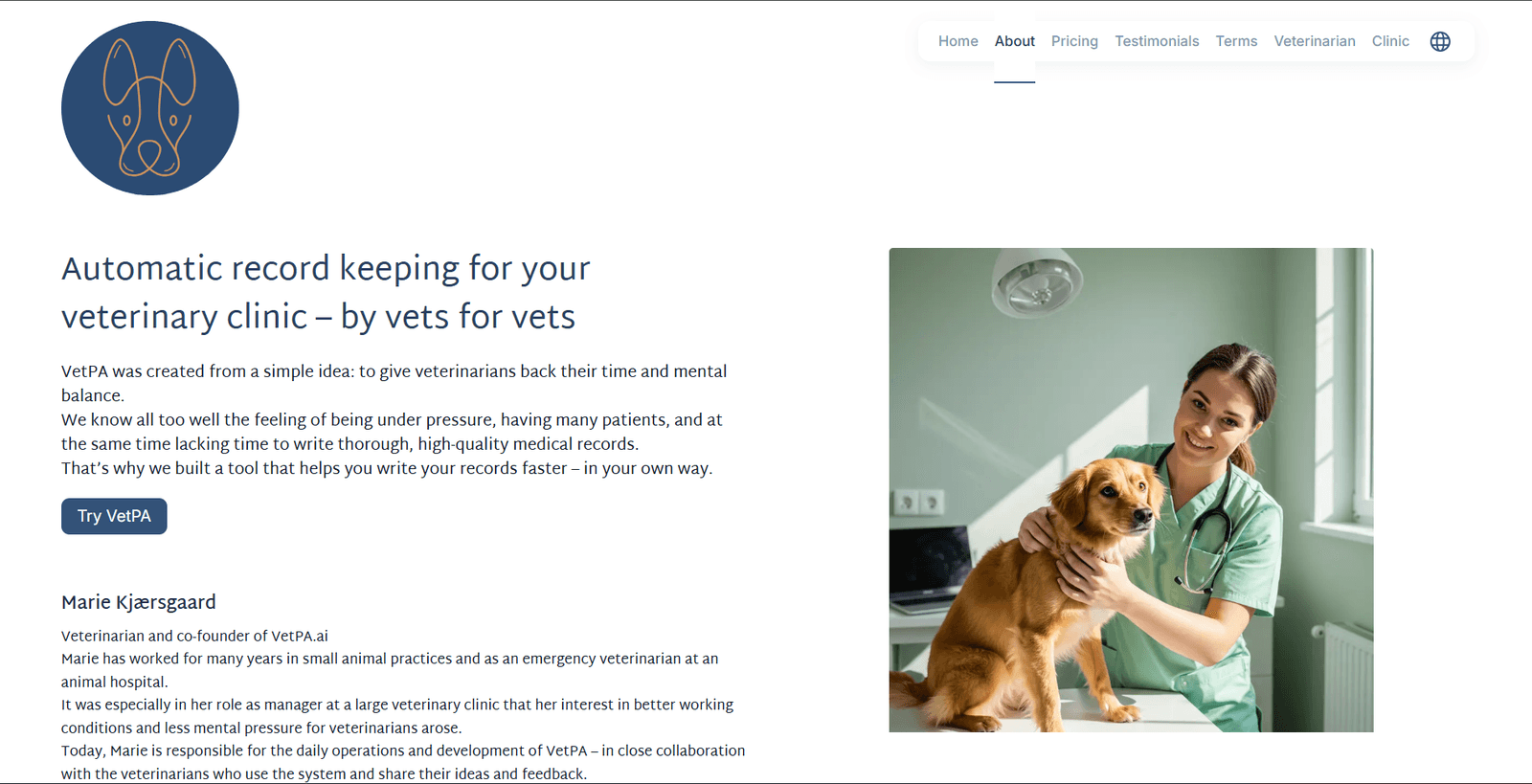
VetPA is an application-focused platform, so its public website needs to communicate the product's purpose clearly while providing an accessible route for veterinary professionals to learn about the service. Its public-facing pages introduce the platform and its intended value for veterinary practices.
My confirmed technology stack includes Next.js, HTML, CSS, and Tailwind CSS, which provide a foundation for building the web experience. However, specific SEO implementations, Core Web Vitals improvements, caching configurations, accessibility audits, or measured performance results have not been provided, so no claims about completed optimization work or ranking improvements are made here.
VetPA delivers an AI-focused approach to veterinary documentation, with the goal of helping practitioners manage clinical records more efficiently and reduce the time spent on administrative work. Its documentation features are intended to support veterinary professionals in their day-to-day clinical activities.
My contribution was in full-stack development using the project's specified frontend, backend, AI, and infrastructure technologies. This work supports the development of a web-based veterinary application, although no independently verified figures for time saved, productivity gains, user adoption, or business growth have been provided.
My work on VetPA reflects my experience developing web applications that combine modern frontend frameworks, Python-based backends, and AI-related technologies. I focus on building applications with clear user workflows and maintainable implementations that align with real product requirements.
If you are developing an AI-powered SaaS product, a Next.js application, or a Python and FastAPI backend, I can help with full-stack development from frontend implementation to backend integration. Let's discuss your project and how I can contribute to building it.
Screen 1 of 4 • Swipe or use arrows to view all



I’m a dedicated Full-Stack Developer passionate about transforming complex ideas into impactful digital solutions. With a focus on MERN Stack, Laravel, and WordPress, I’ve collaborated with global clients to deliver tailored, results-driven projects.
© 2026 Portfolio | All Rights Reserved