© 2026 Portfolio | All Rights Reserved
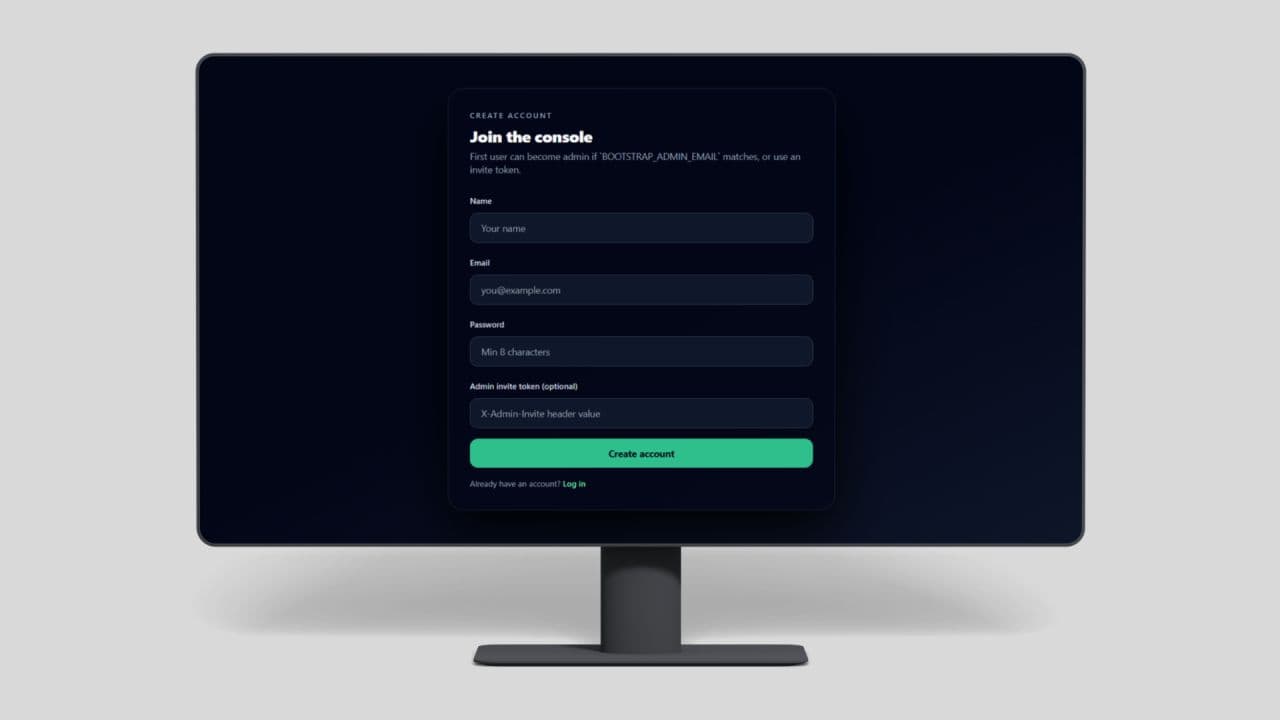
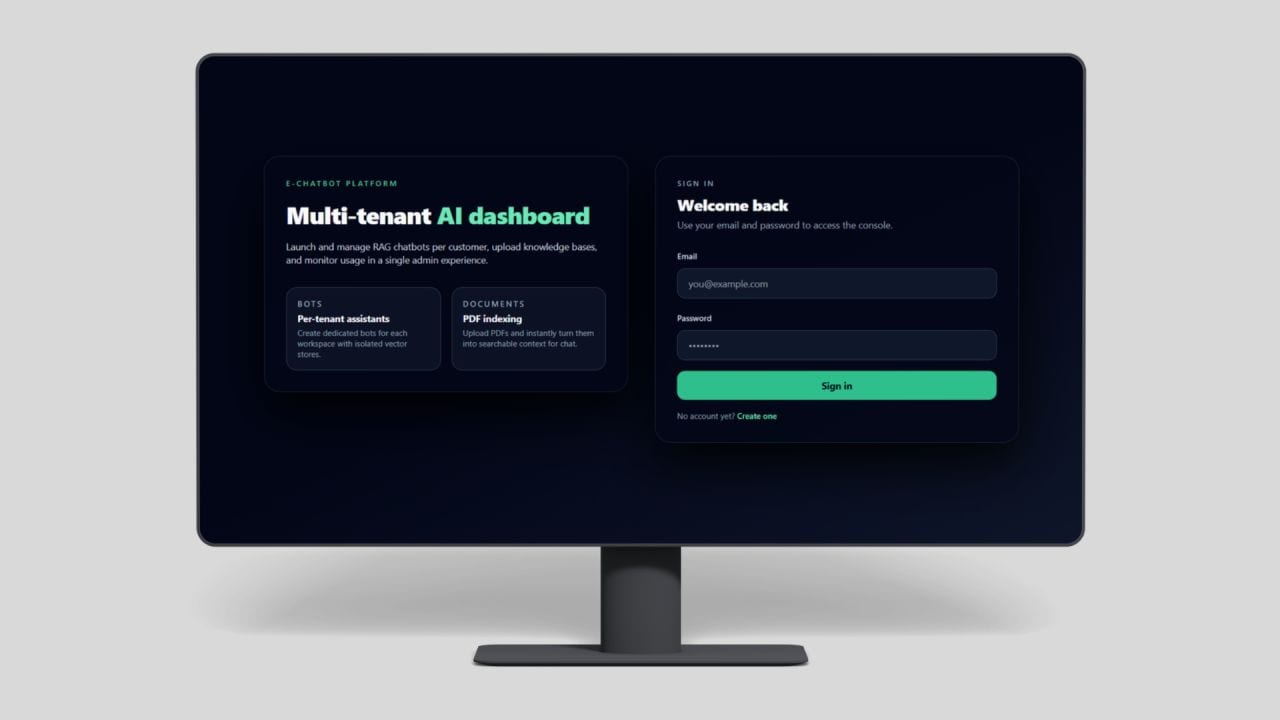
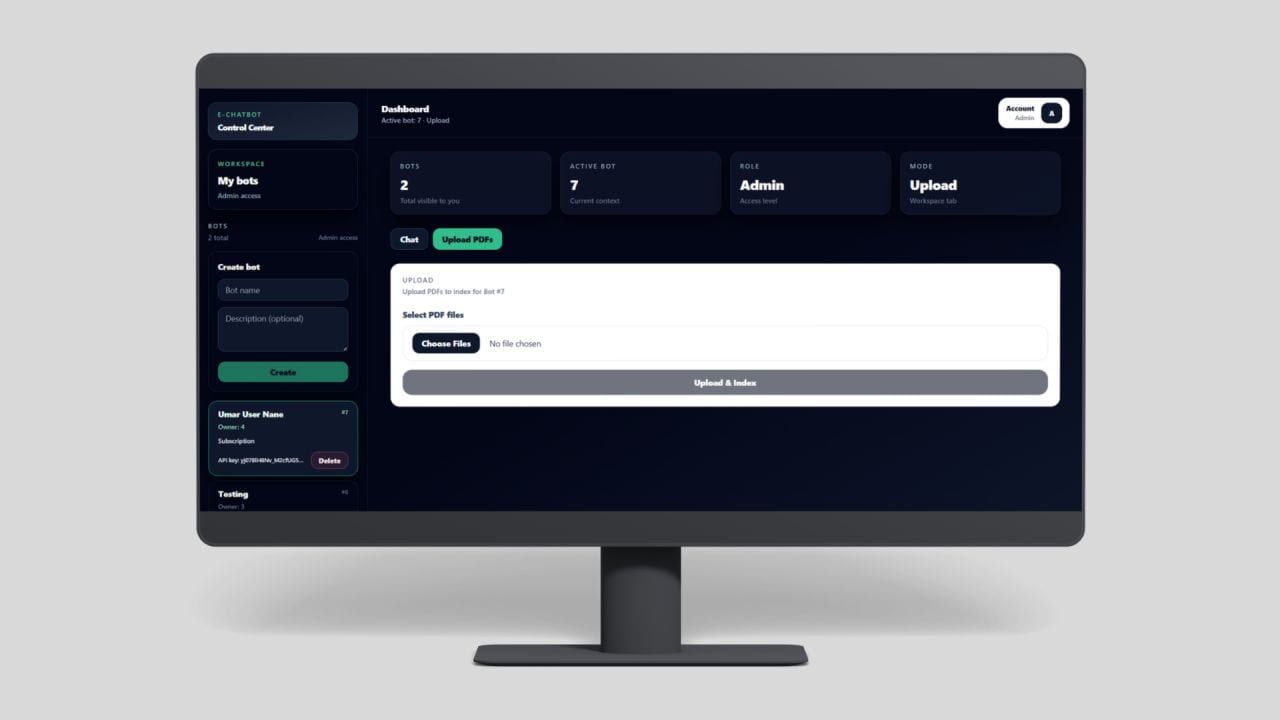
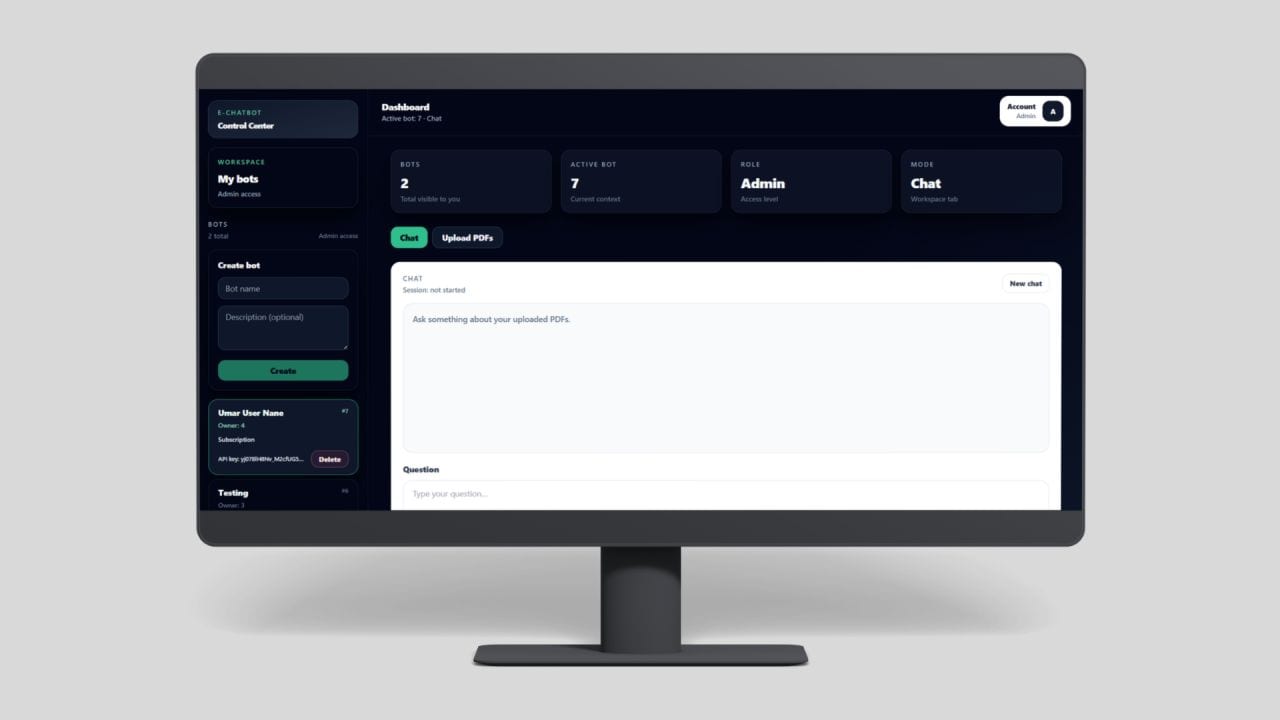
AI-Powered Support Chatbot is an AI application designed to provide context-aware responses by combining large language models with retrieval-based information access. The system uses Retrieval-Augmented Generation (RAG) to retrieve relevant information from a knowledge source and use it to generate responses based on the available context.
As a Full-Stack Developer, my work on this project involves the technologies required to build the application across the frontend and backend. The development stack includes React, Next.js, JavaScript, Tailwind CSS, Python, FastAPI, and vector database technology, alongside Redis, Docker, and AWS. These technologies provide the foundation for developing the user interface, backend services, information retrieval workflow, and application infrastructure.
AI-Powered Support Chatbot focuses on connecting conversational AI with relevant information from an external knowledge source. Instead of relying exclusively on a language model's existing knowledge, the application uses Retrieval-Augmented Generation to retrieve relevant information and provide it as context when generating responses.
The application brings together frontend development, Python-based backend services, vector search, and AI integration within a single project. React and Next.js provide the frontend foundation, while FastAPI supports backend development. Vector database technology enables semantic information retrieval, and Redis, Docker, and AWS are included in the project's technology stack.
One of the main challenges in developing an AI-powered support chatbot is connecting user questions with relevant information before generating a response. A language model may not have access to the specific documentation or knowledge required to answer application-related questions accurately. The retrieval process therefore plays an important role in finding useful context for generating relevant responses.
Another consideration is coordinating the frontend, backend, AI workflow, and data retrieval components. These components need to work together while maintaining a clear user experience and an organized application structure. The project brings together several areas of full-stack development, including frontend implementation, API development, semantic search, AI integration, and application infrastructure.
The project follows a full-stack development approach that combines a React and Next.js frontend with a Python and FastAPI backend. This architecture provides a foundation for managing the user interface separately from server-side processing and AI-related functionality.
The RAG workflow connects information retrieval with AI-generated responses. Vector database technology supports the retrieval of semantically relevant information, allowing relevant context to be used during response generation. Redis, Docker, and AWS are also included in the technology stack to support the broader application environment, depending on their configured roles within the implementation.
The project combines conversational AI, information retrieval, and full-stack application development.
The frontend development stack includes React, Next.js, JavaScript, HTML, CSS, and Tailwind CSS. These technologies provide the foundation for building the chatbot interface and organizing the client-side application. React supports reusable UI components, while Next.js provides the application framework for structuring the frontend.
Tailwind CSS supports consistent styling through utility classes, helping maintain spacing, typography, and layout across the interface. JavaScript handles client-side interactions, while HTML and CSS provide the underlying structure and presentation. Figma is also included in the supplied technology stack for interface design and visual planning.
The backend stack includes Python and FastAPI, providing the foundation for server-side logic and API development. FastAPI can connect the frontend with backend processing, including the information retrieval and response generation stages of the RAG workflow.
Vector database technology supports similarity-based searches over represented information. Within a RAG workflow, relevant information can be retrieved and supplied as context to an AI model to help generate responses related to the user's question.
Redis, Docker, and AWS are also included in the project technology stack. Their specific responsibilities depend on the implemented configuration. The particular embedding model, vector database product, AI provider, API endpoints, and data storage strategy have not been specified.
The application uses a modern web development stack that provides flexibility in structuring the frontend and backend. Next.js offers capabilities relevant to rendering and page delivery, while Tailwind CSS supports a consistent styling approach.
For an AI-powered chatbot, responsiveness also depends on backend processing, information retrieval, model response time, and communication between application components. Docker and AWS are included in the technology stack, but specific deployment configurations, caching strategies, performance measurements, and optimization results have not been provided.
AI-Powered Support Chatbot brings together frontend development, Python-based backend services, AI-assisted response generation, and vector-based information retrieval within a single application. Its primary purpose is to connect conversational AI with relevant external information, providing a foundation for support applications that need responses informed by a particular knowledge source.
The combination of React, Next.js, FastAPI, and vector database technology demonstrates the range of full-stack components involved in developing a RAG-based chatbot. Redis, Docker, and AWS are also part of the supplied technology stack. The project provides a foundation for building AI-powered support experiences that connect user questions with relevant information.
I build full-stack web applications and AI-powered solutions using modern frontend technologies, Python, FastAPI, and AI integration techniques. Whether you need an AI-powered support chatbot, a RAG-based application, or a backend that connects language models with your knowledge sources, I can help develop a solution tailored to your requirements.
Screen 1 of 3 • Swipe or use arrows to view all



I’m a dedicated Full-Stack Developer passionate about transforming complex ideas into impactful digital solutions. With a focus on MERN Stack, Laravel, and WordPress, I’ve collaborated with global clients to deliver tailored, results-driven projects.
© 2026 Portfolio | All Rights Reserved